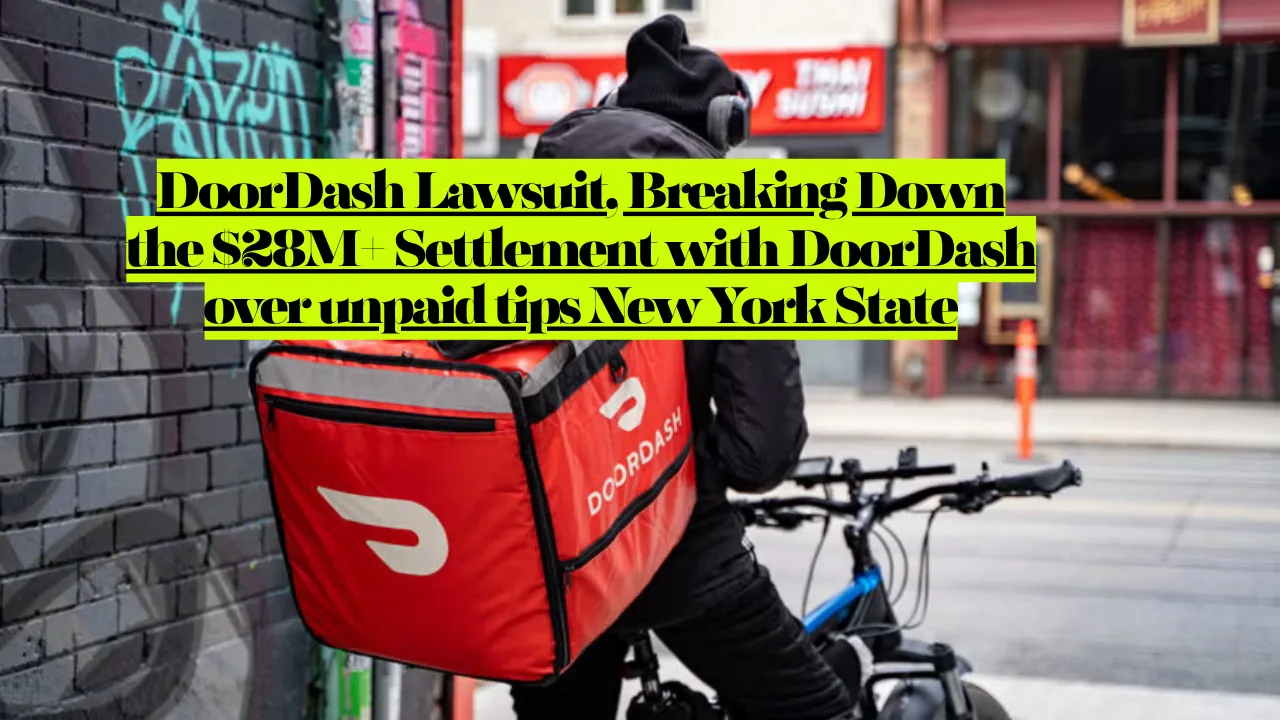
DoorDash Lawsuits: Over $28M Paid for Tips, Labor & Privacy
DoorDash, a titan in the rapidly expanding gig economy, has found itself embroiled in a complex web of legal challenges, resulting in settlements totaling over $28 million. These significant legal battles span critical areas including allegations of tip misappropriation, worker misclassification, and breaches of consumer privacy. As the company navigates the intricate intersections of labor law, consumer protection, and technological innovation, the ongoing scrutiny highlights the evolving landscape for app-based service providers. Understanding the various facets of a
DoorDash lawsuit can shed light on the rights of both its delivery drivers (Dashers) and the customers who rely on its services daily.
The Tip Misappropriation Scandal: A Breach of Trust
Perhaps one of the most widely publicized and financially impactful legal actions against DoorDash centers on its past tipping practices. Between May 2017 and September 2019, DoorDash operated a controversial pay model that directly impacted how driver tips were utilized. Instead of tips serving as an additional income on top of guaranteed base pay, the company used customer tips to offset the base pay it promised its Dashers.
Here's how it worked: If DoorDash guaranteed a driver $10 for a delivery and the customer tipped $3, DoorDash would only contribute $7 of its own money, using the $3 tip to bring the driver's total earnings to the guaranteed $10. This meant that, regardless of the tip amount, the driver's total pay often remained the same, unless the tip exceeded the guaranteed amount. This practice directly contradicted DoorDash's public statements to customers, assuring them that "Dashers will always receive 100 percent of the tip."
This deceptive model led to significant enforcement actions by state attorneys general. New York, for instance, secured a substantial $16.75 million settlement. The claims process for eligible New York Dashers opened in April 2025, with a November 21, 2025 deadline for submissions, expecting payments to be distributed throughout 2025. Similarly, Illinois obtained an $11.25 million settlement, compensating over 79,000 workers. Payments in Illinois were distributed in March 2025 to those who submitted claims by February 10, 2025.
The core issue in these tip misappropriation cases revolved around consumer fraud and transparency. Customers believed their generosity directly benefited their delivery drivers, only for DoorDash to allegedly leverage these tips to reduce its own financial outlay. This practice not only misled consumers but also potentially reduced the incentive for customers to tip generously, undermining the very premise of tipping as a reward for service. These settlements serve as a critical reminder of the importance of clear communication and ethical business practices in the gig economy. For a deeper dive into these issues, you can explore
DoorDash Under Fire: Consumer Fraud, Tip Misuse, & New Legal Battles.
Decoding DoorDash Driver Lawsuits: The Independent Contractor Debate
Beyond tips, a recurring theme in a
DoorDash lawsuit has been the classification of its delivery drivers. Like many gig economy companies, DoorDash classifies its drivers as independent contractors rather than employees. This distinction is crucial, as it exempts the company from providing benefits, paying minimum wages, overtime, and reimbursing for work-related expenses like gas and vehicle maintenance.
Many DoorDash driver lawsuits have sought to challenge this classification, arguing that Dashers, due to the nature of their work and DoorDash's control over certain aspects of their service, should be considered employees. Such a reclassification would mandate DoorDash to reimburse drivers for significant operational costs, including mileage and gas, and ensure compliance with federal and state minimum wage and overtime laws.
These legal challenges have resulted in several substantial settlements:
*
Federal Settlement for FLSA Violations: In May 2024, a federal settlement of $663,520 was approved. This case addressed alleged violations of the Fair Labor Standards Act (FLSA), specifically concerning the failure to pay minimum wages to Dashers misclassified as independent contractors between August 2016 and August 2023.
*
California and Massachusetts Class Action: A more significant $100 million settlement benefited drivers in California and Massachusetts who claimed improper contractor classification from August 2016 through March 2021. In this case, class members received payments proportional to the miles driven while completing deliveries, directly addressing the unreimbursed expenses.
These settlements underscore the ongoing legal and political debate surrounding worker classification in the gig economy. For drivers, the difference between being an independent contractor and an employee can amount to thousands of dollars annually in expenses and benefits.
Practical Tip for Dashers: Regardless of classification, it's crucial for drivers to meticulously track all business expenses, including mileage, fuel, vehicle maintenance, and phone data plans. This documentation is vital for tax purposes and can also be critical evidence in any future legal claims regarding misclassification. Understanding your current pay structure and the nuances of DoorDash's policies can also help you identify if you might be eligible for future claims. For more details on these settlements, see
DoorDash Driver Settlements: Unpacking Misclassified Workers & Tips.
Privacy Violations and Consumer Protection Breaches
The legal challenges against DoorDash extend beyond worker rights and tipping practices to include consumer privacy. In an age where personal data is highly valued, companies are held to strict standards regarding how they collect, use, and share customer information. DoorDash has faced scrutiny in this area as well.
In February 2024, the California Attorney General secured a $375,000 settlement after DoorDash was found to have participated in marketing cooperatives that shared customer personal information. The key issue was that this sharing occurred without adequate notice to customers and, crucially, without providing them with an opt-out option. This practice constituted a violation of both the California Consumer Privacy Act (CCPA) and the California Online Privacy Protection Act (CalOPPA), two landmark pieces of legislation designed to protect consumer data rights.
Furthermore, the reference context briefly mentions a "2019 data breach" that "exposed p" (though the sentence is incomplete). This indicates that DoorDash has also contended with cybersecurity incidents, further emphasizing the challenges companies face in safeguarding sensitive customer information. Data breaches can expose personal details, payment information, and delivery addresses, leading to potential fraud and identity theft for affected individuals.
Practical Tip for Consumers: When using any delivery app, including DoorDash, always review their privacy policy. Be mindful of the permissions you grant the app and consider limiting the personal information you share. Regularly check your account settings for privacy controls, and be wary of emails or communications that seem suspicious, as they could be phishing attempts following a data breach.
Emerging Legal Challenges on the Horizon
The legal scrutiny surrounding DoorDash is far from over, with new and evolving challenges continually emerging. These upcoming cases indicate a broadened scope of legal battles, moving beyond traditional labor and consumer protection issues.
One notable future
DoorDash lawsuit is a defamation case seeking $10 million. Slated for March 2025, this lawsuit alleges that DoorDash improperly branded a CEO as a fraudster. Such a claim highlights the potential for companies to face legal action over their public statements and corporate conduct, especially when it impacts an individual's professional reputation.
Additionally, in June 2025, Canada’s competition authority launched a major pricing deception lawsuit against DoorDash. While specific details were not provided in the reference, such a lawsuit typically investigates whether a company's pricing practices mislead consumers or create an unfair competitive environment. This could involve hidden fees, misrepresented discounts, or other tactics that obscure the true cost of services. These international legal actions demonstrate that regulatory bodies globally are closely monitoring the operations of gig economy platforms.
Conclusion
DoorDash's journey through numerous legal challenges, culminating in over $28 million in settlements, paints a clear picture of the complexities inherent in the gig economy. From the controversial practice of using customer tips to subsidize driver pay, to the ongoing debate over worker classification and the critical issue of consumer privacy, each
DoorDash lawsuit has significant implications. These cases not only address past wrongs but also help shape the future of labor practices, consumer rights, and data protection across the entire industry. As DoorDash and its peers continue to evolve, transparency, ethical conduct, and adherence to legal frameworks will remain paramount for maintaining consumer trust and ensuring fair treatment for the millions of workers who power the modern gig economy.